Pacific Boa Candoia carinata



Description
Description from View on Wikipedia →
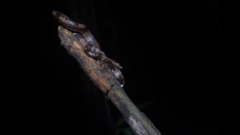
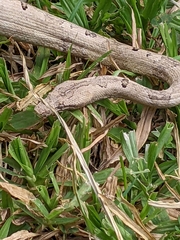
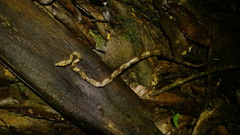
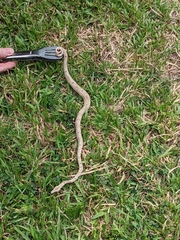
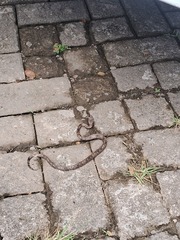
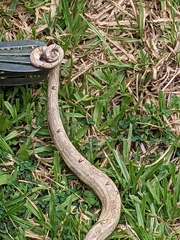
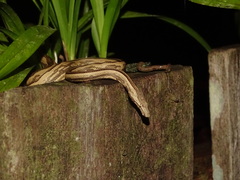
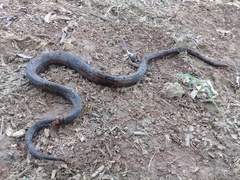
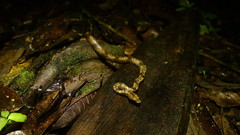
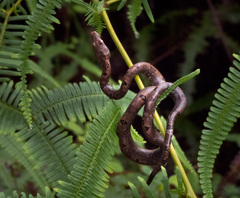
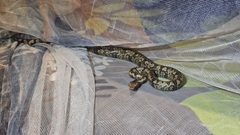
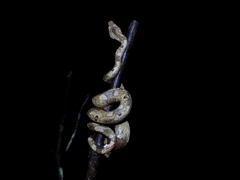
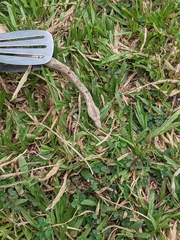
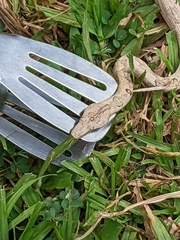
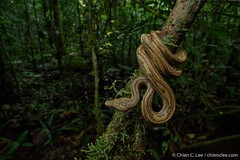
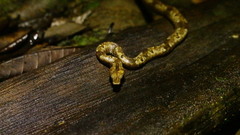
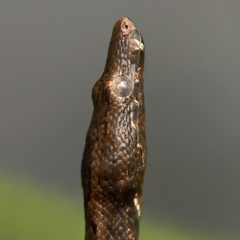
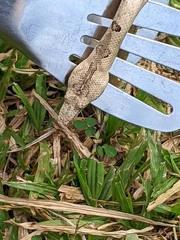
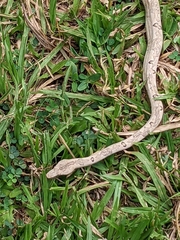
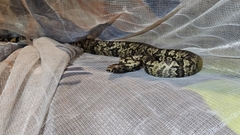
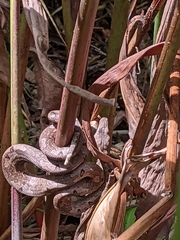
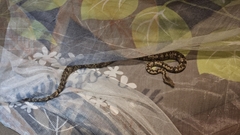
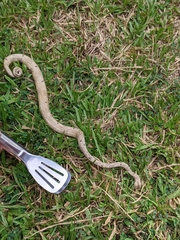
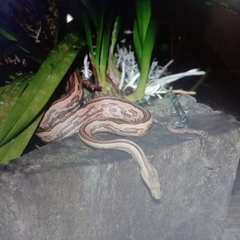
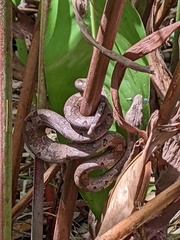
Candoia carinata, known commonly as the Pacific ground boa, Pacific keel-scaled boa, or Indonesian tree boa,[citation needed] is a species of snake in the family Boidae.[2]
Distribution and habitat
C. carinata is found in Indonesia, New Guinea, and the Bismarck Archipelago.[1]
In captivity
C. carinata is popular as a pet in Indonesia, where it is known by the common name monopohon (pohon means "tree" in the Indonesian language).
Subspecies
Candoia carinata carinata (Schneider, 1801)
While the nominate subspecies, C. c. carinata, may be occasionally found in trees, this Papuan snake is most often found on the ground.[3]
Candoia carinata paulsoni (Stull, 1956)
Males of C. c. paulsoni are smaller and lighter than females,[3] and show spurs. Males are 0.9–1.0 m (35–39 in) long, and 300–400 g (11–14 oz) in weight. Females are generally 1.2–1.4 m (47–55 in) in length and weigh 1.0–1.2 kg (2.2–2.6 lb). The colour varies from dark brown to auburn with distinct patterns, though there is also the color morph "paulsoni santa isabella ", which is white.
The subspecies C. c. paulsoni was elevated to species status as Candoia paulsoni by H.M. Smith, et al. in 2001.[1]
Candoia carinata tepedeleni (H.M. Smith & Chiszar, 2001)
Commonly known as Tepedelen's bevel-nosed boa.[1]
Etymology
The specific name or subspecific name, paulsoni, is in honour of Swedish herpetologist John Paulson.[4]
The subspecific name, tepedeleni, is in honour of herpetologist Kumaran Tepedelen.[4]
References
- ^ a b c d Species Candoia carinata at The Reptile Database . www.reptile-database.org.
- ^ "Candoia". Integrated Taxonomic Information System. Retrieved August 10, 2010.
- ^ a b Marshall, Andrew J.; Beehler, Bruce McP. (2007). The Ecology of Indonesian Papua: Part One: The Ecology of Indonesia Series, Volume VI. North Clarendon, Vermont: Tuttle Publishing. 784 pp. ISBN 978-0-7946-0393-9. (Candoia paulsoni, pp. 582, 595).
- ^ a b Beolens, Bo; Watkins, Michael; Grayson, Michael (2011). The Eponym Dictionary of Reptiles. Baltimore: Johns Hopkins University Press. xiii + 296 pp. ISBN 978-1-4214-0135-5. (Candoia paulsoni, p. 202; Candoia carinata tepedeleni, p. 263).).
Further reading
- Boulenger GA (1893). Catalogue of the Snakes in the British Museum (Natural History). Volume I. Containing the Families ... Boidæ ... London: Trustees of the British Museum (Natural History). (Taylor and Francis, printers). xiii + 448 pp. + Plates I-XXVIII. (Enygrus carinatus, pp. 107–109).
- Schneider JG (1801). Historiae Amphibiorum naturalis et literariae Fasciculus Secundus continens Crocodilos, Scincos, Chamaesauras, Boas, Pseudoboas, Elaps, Angues, Amphisbaenas et Caecilias. Jena: F. Frommann. vi + 374 pp. + Plates I-II. (Boa carinata, new species, pp. 261–263). (in Latin).
- Smith HM, Chiszmar D, Tepedelen K, van Breukelen F (2001). "A revision of bevelnosed boas (Candoia carinatus complex) (Reptilia: Serpentes)". Hamadryad 26 (2): 283–315.
_from_Barangay_Nassiping,_Gattaran_-_ZooKeys-266-001-g077.jpg) |
This Alethinophidia article is a stub. You can help Wikipedia by expanding it. |
This article uses material from the Wikipedia article "Candoia carinata", which is released under the Creative Commons Attribution-Share-Alike License 3.0. Content may have been omitted from the original, but no content has been changed or extended.
Common Names
Taxonomic Hierarchy
Kingdom: Animalia
Phylum: Chordata
Class: Reptilia
Order: Squamata
Family: Boidae
Genus: Candoia
Species: Pacific Boa Candoia carinata
Conservation Status
least concern (LC)